Apple’s Secret Weapon Against Chromebooks Could Be an A15 MacBook
 Dom Esposito / YouTube
Toggle Dark Mode
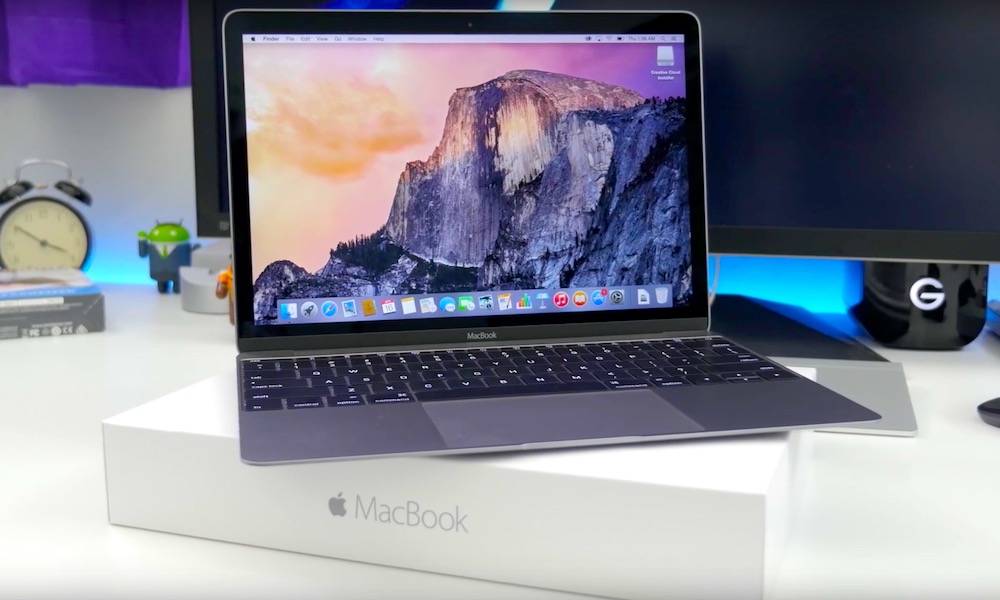
While Apple has a lot planned for 2026, one of the more unusual entries is expected to be a budget MacBook powered by an iPhone A-series chip. However, new evidence suggests that Apple has at least considered an even lower-end configuration for the new model.
We first began hearing reports of an inexpensive new MacBook over the summer, mostly from analyst Ming-Chi Kuo, who offered some unusual specific claims on Apple’s plans for the new model. By all accounts, this won’t be a resurrection of Apple’s smaller 12-inch MacBook, but rather a 13-inch model that’s only slightly smaller than the current 13-inch MacBook Air.
The real surprise twist was that Apple planned to use an A18 chip to power the new laptop — the same chip used in the iPhone 16 lineup. This would likely be the A18 Pro rather than the standard A18, but it would still mark the first time an iPhone chip has ever been used in a Mac.
Kuo and other supply chain sources predicted this MacBook would start at around $599 for a base model, with Apple likely to follow its usual convention of offering a second tier with more storage for $100 more. However, new evidence suggests that Apple could have a second tier in the lineup that might come in at an even lower price.
The leak comes from internal Apple debug code that briefly appeared on Apple’s public-facing website earlier this year before being quickly pulled once the mistake was realized. However, it was there long enough for eagle-eyed sleuths to glean some useful information on the company’s plans. While most of what’s there is obvious evolutionary stuff — nobody needs to peek at Apple’s plans to guess the next iPhone chip will be called the A20 — the most interesting revelation was that Apple has also tested a MacBook with an A15 chip.
Since every report on the new low-cost MacBook has pointed to an A18 Pro chip, the fact that a model exists somewhere in Apple’s skunkworks with a chip from the iPhone 13 era is interesting. Of course, the most likely explanation is that Apple tried the A15 and dismissed it, deciding it needed to go for something more powerful; however, it could also suggest the company is considering an even cheaper MacBook to try to boost macOS adoption on the lower end of the price spectrum.
Mass Market Macs for Education?

While the 2021-era A15 chip sounds a bit ludicrous for a MacBook, this could be a device aimed at institutions rather than consumers. Schools typically opt for Chromebooks due to their significantly lower prices. Even $50 can make a big difference to a school budget when you’re buying these by the dozens.
While an A15-powered MacBook wouldn’t handle Apple Intelligence or modern graphics-intensive apps and games, it would meet the needs of educators and still run circles around the silicon found in most budget Chromebooks.
In November, Bloomberg’s Mark Gurman confirmed Kuo’s reports, adding that he believes Apple’s primary motivation for the A18 Pro model is to capture casual users and take the fight to Chromebooks. While Apple has already cornered the tablet market in schools, it’s losing ground — and mindshare — to Google’s platform, especially as students move into the higher grades where a full keyboard-equipped machine is more necessary than a tablet.

However, while an A18 Pro MacBook might appeal to educators in specific fields like communications and technology, the $600 price tag would be steep for an everyday laptop for students, considering that decent Chromebooks can be purchased for around $200. An A15-powered MacBook might allow Apple to present a more competitive alternative, and while it may not offer it for that low of a price to the general public, it could bundle it within educational deals that might make it appealing to educational institutions — especially those that have already bought into the iPad ecosystem.
Apple would also need to offer software support commitments that align with institutional expectations. While the A15 chip hasn’t been used in a new device since 2022, shipping it in a 2026 laptop would require a fresh support commitment. Schools typically expect 6–8 years of life from their devices, which would force Apple to support the A15 architecture well into the 2030s.
That’s not entirely out of the question, as the 2013 Mac Pro received critical updates for nearly 11 years, and the A8-powered Apple TV from 2015 can still run today’s tvOS 26 release. Keeping a legacy iPhone chip on life support for a decade would be a bold move. However, it could also be exactly the play Apple needs to make to restore the Mac’s prominence in the classroom.
[The information provided in this article has NOT been confirmed by Apple and may be speculation. Provided details may not be factual. Take all rumors, tech or otherwise, with a grain of salt.]