Your Next iPhone Might Have ‘Intel Inside’
Toggle Dark Mode
A surprising report last week revealed that Apple may tap Intel to build the M7 chip, and now it looks like the partnership could go beyond the Mac.
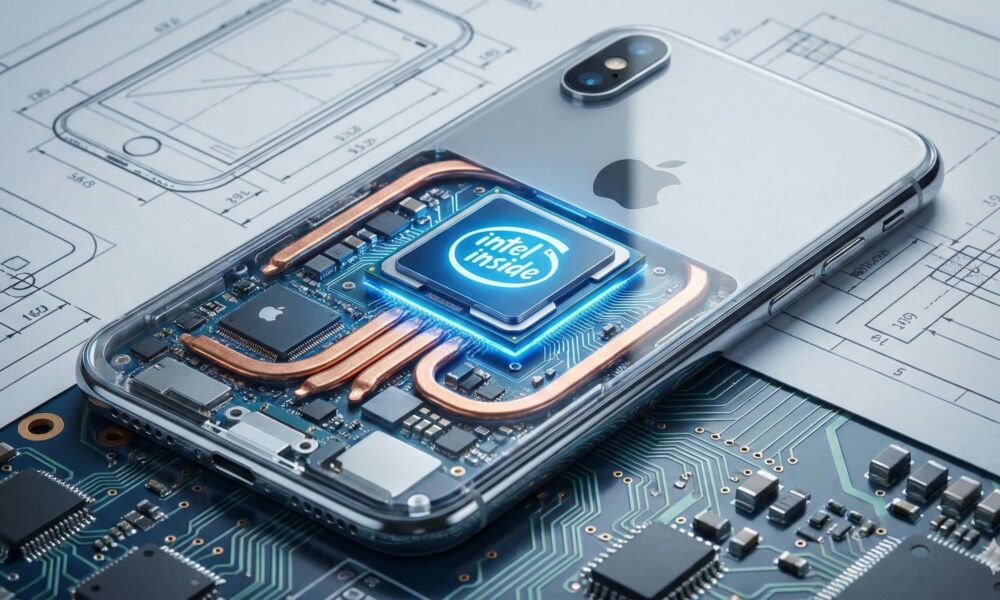
It would be ironic enough for Intel, a company whose own chips were once the heartbeat of Apple’s Macs, to shift to manufacturing Apple’s much more powerful silicon. However, the US-based chipmaker could also find itself supplying A-series chips for future iPhones.
The original prediction of an Intel-made M7 came from supply chain analyst Ming-Chi Kuo, who said last week that “Intel will “begin shipping Apple’s lowest-end M processor as early as 2027.” Now, another analyst has added his voice to the chorus, claiming the chipmaker will also supply at least some non-pro iPhone chips the year after that.
Jeff Pu, of GF Securities, shared the details with investors in a research note seen by MacRumors. The firm’s analysts have reason to believe that Intel will reach a supply deal with Apple for some A-series chips that would start in 2028.
This would presumably see Intel making the A22 or A23, depending on when things kicked off (and assuming Apple sticks with its current numbering scheme). With this year’s iPhone 17 lineup using the A19 family of chips, this means the iPhone 20 or iPhone 21 could have an Intel-made chip inside.
Pu notes that Intel’s role would be limited to producing “non-pro” iPhone chips, which suggests that Apple would likely still have the A22 Pro made by long-time fabrication partner, TSMC. That aligns with what Kuo said about the Mac deal, where the M7 would be handled by Intel, while the M7 Pro, M7 Max, and anything else beyond that would still be TSMC’s department.
What This Means
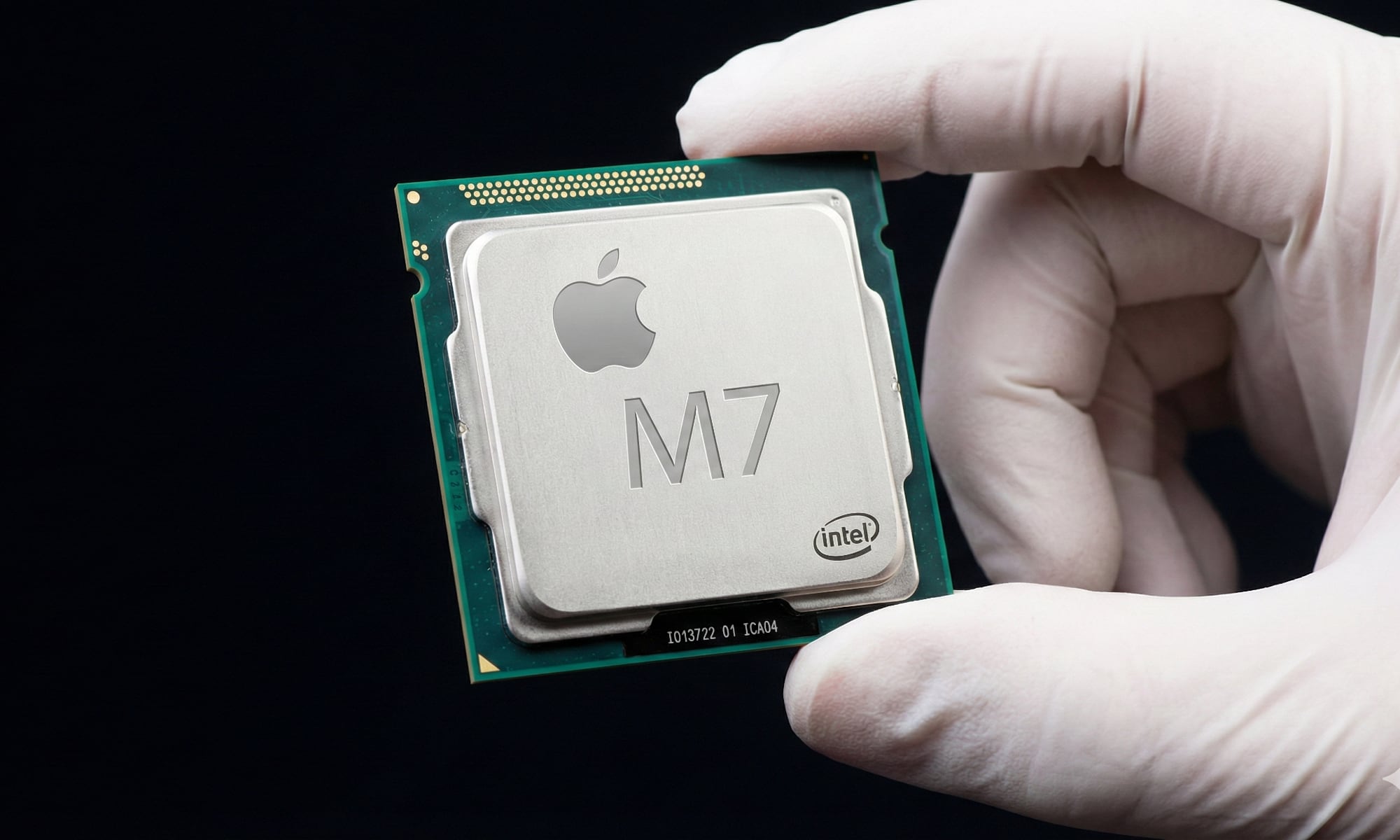
To be clear, this doesn’t mean Intel will have anything to do with designing these chips. If anything, this is little more than an attempt for Apple to diversify its supply chain and possibly curry some political favor with the current administration in the process.
Four years ago, Intel pivoted to a “Foundry Services” business that would simply manufacture other people’s chip designs. Pat Gelsinger, who was Intel’s CEO at the time, publicly stated that he hoped to court Apple as a customer, letting Intel manufacture its A-series and M-series chips.
There was no evidence that Apple was interested in such an arrangement back then, but the political climate has changed significantly in the past four years. Today, the Trump administration places a great deal of political stock in companies who are willing to manufacture in the US, and in the case of Intel, it’s translated that to literal stock.
In a historic deal earlier this year, the US government invested $8.9 billion for a 10% stake in the chipmaker, making it one of the largest shareholders of a private corporation — an unprecedented move for a company that wasn’t fighting for survival, but rather for national dominance.
Apple is always looking for ways to diversify its supply chain, as it hates being beholden to any one supplier. By all accounts, Apple and TSMC enjoy a very cozy relationship, and the Taiwanese firm has set up several plants in the US to manufacture Apple silicon. Apple has scored some points with that, but that can’t compare to doing business with a company that’s not only born and bred in the USA, but is also partly owned by the US government.
The win for Intel would also likely be more than just the raw dollars from Apple’s business. Having Apple as a partner would be a huge vote of confidence that it could undoubtedly parlay into attracting more business from other quarters.
[The information provided in this article has NOT been confirmed by Apple and may be speculation. Provided details may not be factual. Take all rumors, tech or otherwise, with a grain of salt.]