The ‘iPhone Fold’ May Skip a Physical SIM in Favor of eSIM
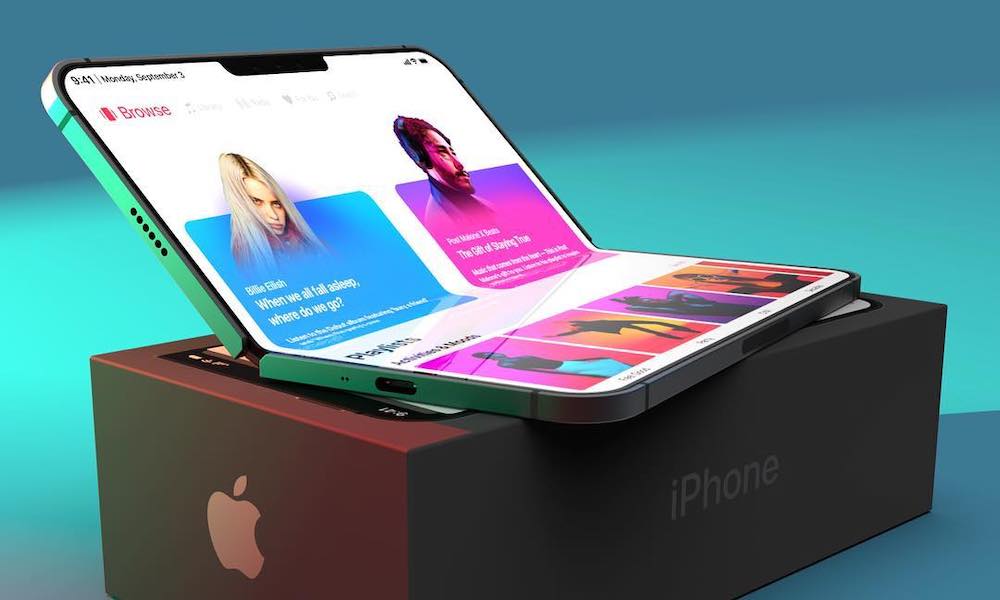 iPhone Fold Concept [Bro.King / Instagram]
Toggle Dark Mode
In a rumor that seems like an obvious evolution of Apple’s strategy, the company’s long-rumored foldable iPhone could launch without a physical SIM card next year, requiring potential buyers to go all-in on eSIM, regardless of the country they’re in.
Apple has reportedly been working on a foldable iPhone for years, but the company’s plans didn’t come into meaningful focus until later in 2024. Prior to that, it was anybody’s guess whether the first foldable iPhone would be a clamshell-style “iPhone Flip” or a book-style “iPhone Fold.” There was enough evidence to suggest Apple was likely pursuing both paths before deciding which way to go. Some reports even suggested the company might release a foldable iPad or MacBook first, leapfrogging the iPhone.
As recently as mid-2024, rumors were still leaning toward the “iPhone Flip,” with Apple reportedly prototyping two potential designs, and The Information claimed Apple had moved beyond the concept stage into a tangible product, codenamed V68. We may never know for sure what Apple’s thinking was, but for whatever reason the company seemingly abandoned the clamshell design and pivoted toward the “iPhone Fold” instead.
Hints of that surfaced in late 2024, and by early this year, all the usual mainstream sources, including Bloomberg’s Mark Gurman, analysts Ming-Chi Kuo and Jeff Pu, and display industry analyst Ross Young, agreed on what the new iPhone design would look like: a device in the spirit of the Galaxy Z Fold, OnePlus Open, and Pixel Fold.
While sources haven’t nailed down the exact specs, they’re in a remarkably consistent ballpark. Apple’s first foldable iPhone is expected to measure around 9 mm thick when folded and less than 4.8 mm when open, making it even thinner than Apple’s current record-holder, the 13-inch M5 iPad Pro. Sources have also long believed the iPhone Air, which was just a rumor until September, would serve as an engineering test-bed for creating the necessary thinness.

Looking at the iPhone Air, it’s not hard to imagine it as one half of a foldable iPhone, so it’s probably not a big surprise that multiple reports have suggested that Apple also plans to bring over one other innovative feature of its ultra-slim model: the SIM-less design.
Apple embraced embedded SIMs, or eSIMs, in its iPhones beginning with the iPhone XS and iPhone XR models in 2018, but this existed alongside a physical SIM card until 2022, when Apple phased out the slot on US iPhone 14 models. Still, iPhone 14 models sold in other countries retained the dual SIM/eSIM design. That continued with the iPhone 15 and iPhone 16, and while Apple expanded eSIM-only models to more countries with the iPhone 17 lineup, there are still plenty of places those are sold with a physical SIM card.
However, the iPhone Air was a different story. To make it as thin as humanly possible, Apple had to cut out every extraneous element it could. That meant a single camera and speaker, but Apple left no efficiency unexplored; it cut things so tight there wasn’t even room for wired video output connections in the USB-C port.
Such extreme engineering naturally left no room for a physical SIM card slot either, especially since the body of the iPhone Air is nearly all battery. Everything else, including the A19 Pro chip and wireless technology, lives in the camera plateau at the top edge.
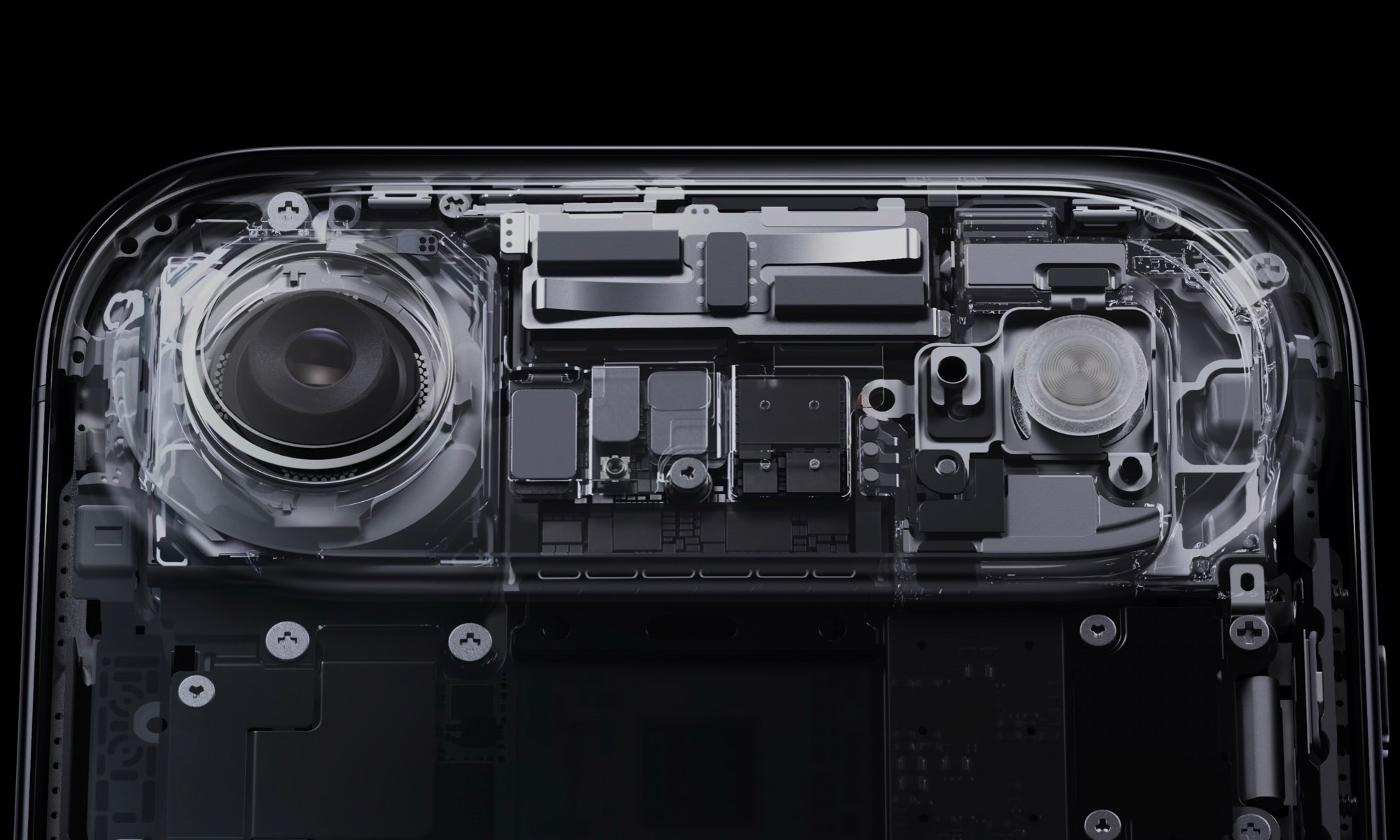
As a result, the iPhone Air was the first iPhone to kill the physical SIM card. That created some initial problems in China, where government approval was required to sell eSIM-only smartphones. While Apple was presumably confident in a quick approval, regulatory hurdles delayed the iPhone Air’s Chinese launch until October 17.
However, this also means that the iPhone Air has blazed the trail for Apple’s iPhone Fold to follow. With the foldable expected to be even thinner than the iPhone Air — 4.8 mm when open — it doesn’t seem like it will even be possible to cram a SIM slot in. A SIM card is less than a millimeter thick, but the slot it goes into needs to have the necessary hardware to physically hold and read the SIM card.
While Apple’s engineers could likely find a way to make it work, there seems to be little reason to. The iPhone Fold isn’t expected to be a mainstream device, and anyone willing to spend upwards of $2,000 on a folding iPhone shouldn’t have a problem finding a carrier to provision it with an eSIM — and the iPhone Air has already proven that’s not a dealbreaker.
[The information provided in this article has NOT been confirmed by Apple and may be speculation. Provided details may not be factual. Take all rumors, tech or otherwise, with a grain of salt.]