
From Beginner to Bull: 10 Apps to Master Your Money in 2026

If you want to get better at money in 2026, you don’t need another viral stock pick or a loud prediction about where the market is headed next week. What you actually need is to learn. The biggest shift in personal finance over the last decade hasn’t been access — it's been understanding. After all, you can now open a brokerage account in minutes, trade fractional shares, or just buy ETFs, bonds, and other assets straight from your iPhone. However, without the right context, it’s easy to find yourself lost — or worse, making moves you don’t fully understand.
Why did the market move up on bad news? Why do interest rate hikes hurt some sectors more than others? Why do some investors care deeply about valuation while others focus on momentum and price action?
The difference between feeling overwhelmed by finance and feeling confident in it usually comes down to education. The good news is that your iPhone can double as a portable finance classroom if you’re intentional about which apps you use. The key is choosing the right apps that teach you how to understand the economy (both yours and the world’s).
If you want to care more about finance this year, here are some of the best apps for the job. Whether you’re a beginner trying to understand the basics or someone who wants to sharpen your skills, read on for 10 tools that have everything you need.
Yahoo Finance: Stocks & News
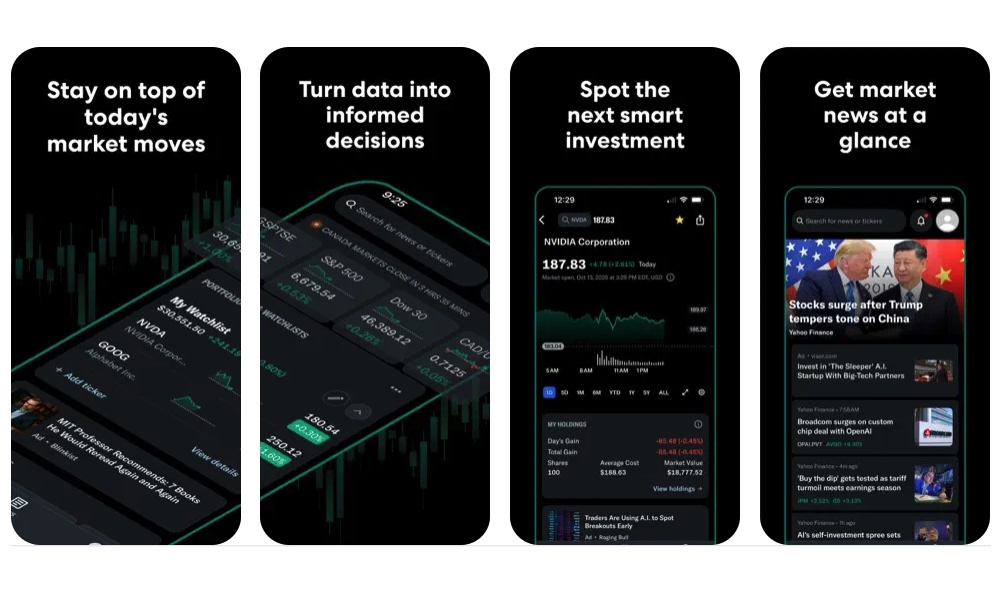
Yahoo Finance is one of the most underrated learning tools available on your iPhone. At first glance, it looks like a simple market-tracking app where you check stock prices and glance at headlines. But if you use it the right way, it can also help you learn how markets move and why.
When you build a thoughtful watchlist that includes the right stocks, ETFs, maybe a commodity or two, and even a global index, you’ll see how earnings reports trigger volatility. You’ll notice how entire sectors move together after economic report releases. You’ll begin to recognize that markets don’t move randomly.
The earnings calendar inside Yahoo Finance is especially educational. It shows how price movements often cluster around key events. You’ll also be able to check the news and current events that might affect your real-life portfolio, or might even give you a clue on what to invest in to take advantage of a long-term stock you want to hold.
Bloomberg
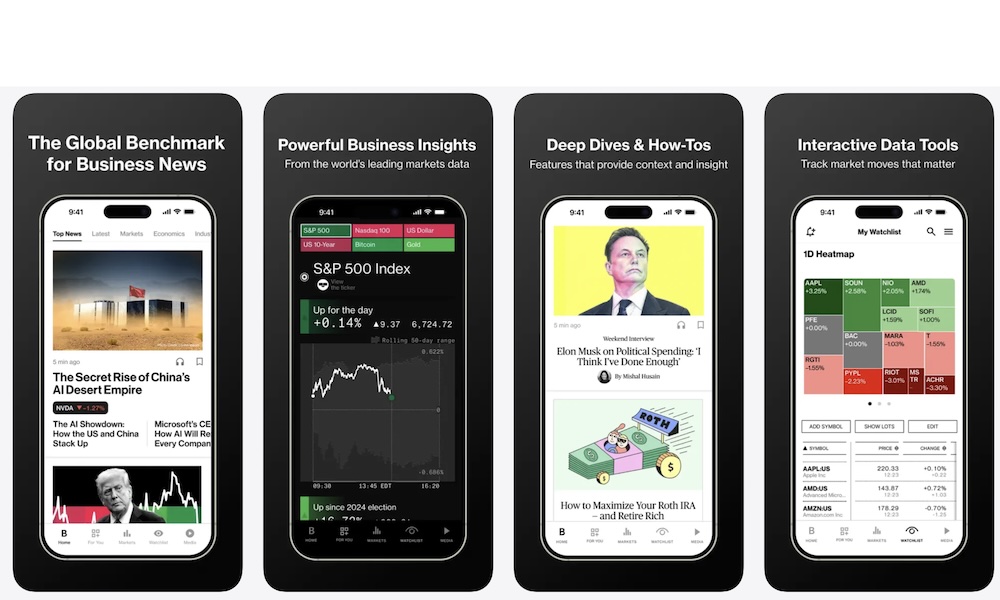
Bloomberg is where you go when you want to zoom out and see the bigger picture. While many apps focus narrowly on stocks or short-term movements, Bloomberg forces you to think globally. It covers central bank decisions, inflation trends, geopolitical developments, commodity prices, currency movements, and how all of those factors interact.
In 2026, markets are deeply interconnected. A rate decision in the United States can impact emerging markets. A supply chain disruption may move commodities and transportation stocks. Even energy prices can have an effect across industries in ways that aren’t obvious at first glance. Bloomberg can help you understand that.
The app’s real-time updates and video coverage also show you how quickly information spreads and how markets digest that information. Over time, you develop a more systems-oriented way of thinking about finance, which is essential in this fast-moving global economy.
Morningstar Investor
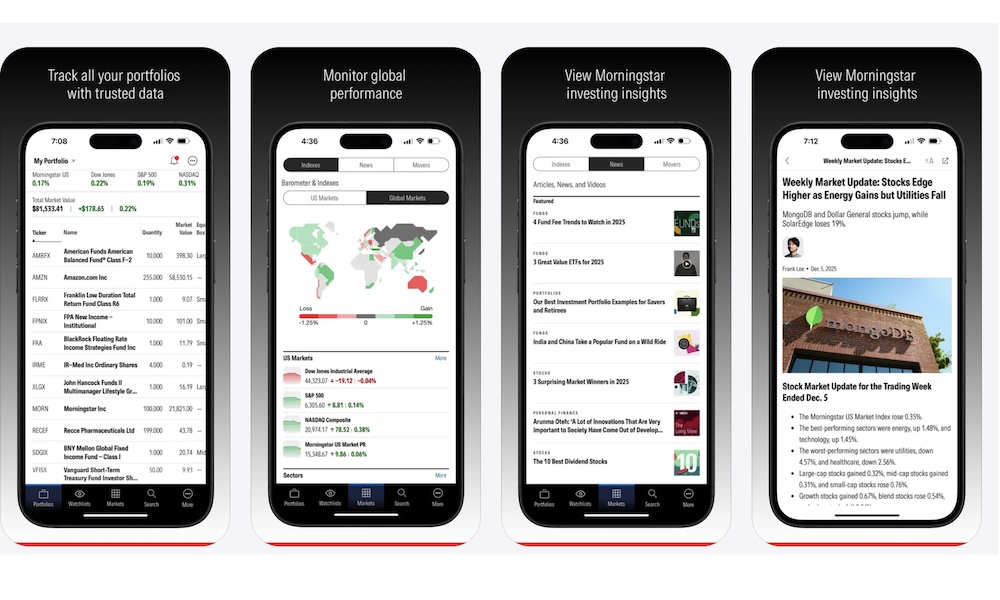
Morningstar is an amazing app for long-term investing fundamentals. It doesn’t try to excite you with flashy headlines or constant alerts. Instead, it focuses on research, valuation, and disciplined analysis. That makes it one of the best apps for anyone who wants to move beyond speculation and learn how to invest more thoughtfully.
Inside Morningstar, you’ll find analyst ratings, fair value estimates, detailed company reports, and comparisons between ETFs and mutual funds. Reading these reports teaches you how professionals evaluate businesses. You start thinking about cash flow, competitive advantages, growth durability, and risk factors instead of just price momentum.
Morningstar also focuses on portfolio construction. By comparing funds and asset allocations, you learn how diversification works in practice. You see how different sectors, geographies, and asset classes interact inside a portfolio. You can start building a solid foundation for your future while you’re still learning the ropes.
Seeking Alpha
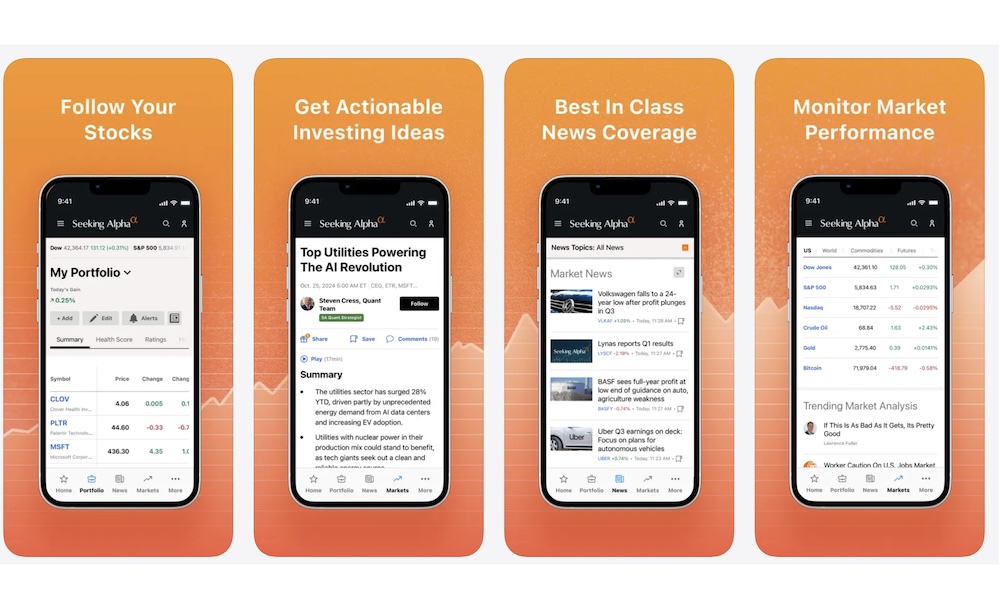
Seeking Alpha teaches you how to evaluate competing arguments. Unlike traditional financial news outlets that focus mainly on reporting events, Seeking Alpha publishes detailed analyses written by contributors with varying viewpoints.
For almost any major company, you can find both bullish and bearish comments. Reading both sides forces you to examine assumptions, identify risks, and weigh evidence critically, which can be incredibly valuable.
Instead of passively consuming opinions, you start analyzing them. That skill is one of the most important competencies in finance. After all, you want to learn how to invest your money wisely, and the more you listen to both sides, the better decisions you can make.
Khan Academy
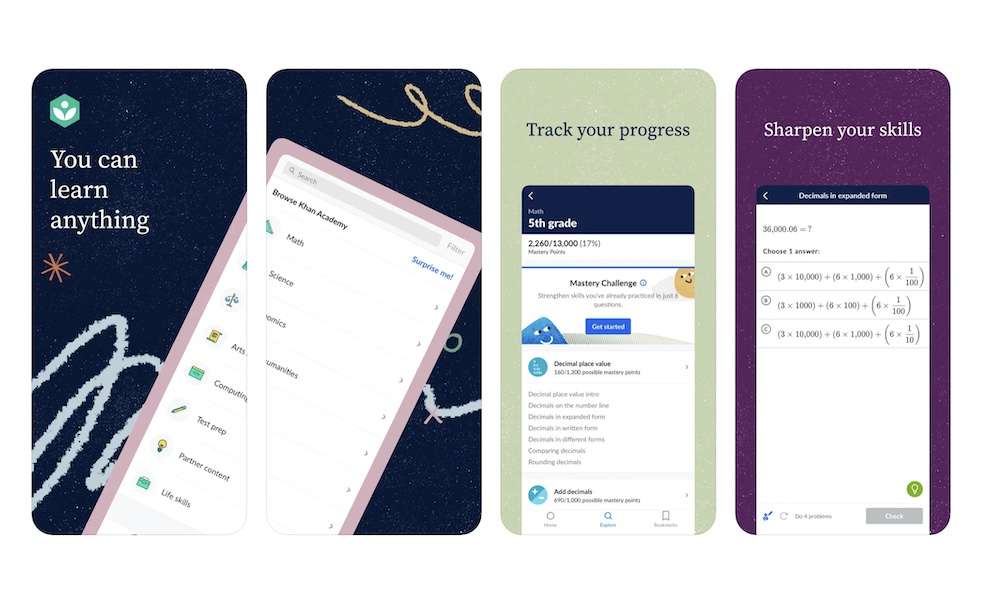
Khan Academy offers lessons in personal finance and economics that can help you build financial knowledge. It’s especially helpful if you feel like you jumped into investing without fully understanding the basics.
The courses cover topics like inflation, interest rates, banking systems, fiscal policy, and investment fundamentals. These lessons provide context for everything else you encounter in markets.
The explanations are clear and beginner-friendly, but they don’t oversimplify it. They build logically from one concept to the next, helping you develop a coherent mental model of how financial systems operate.
Fidelity Investments
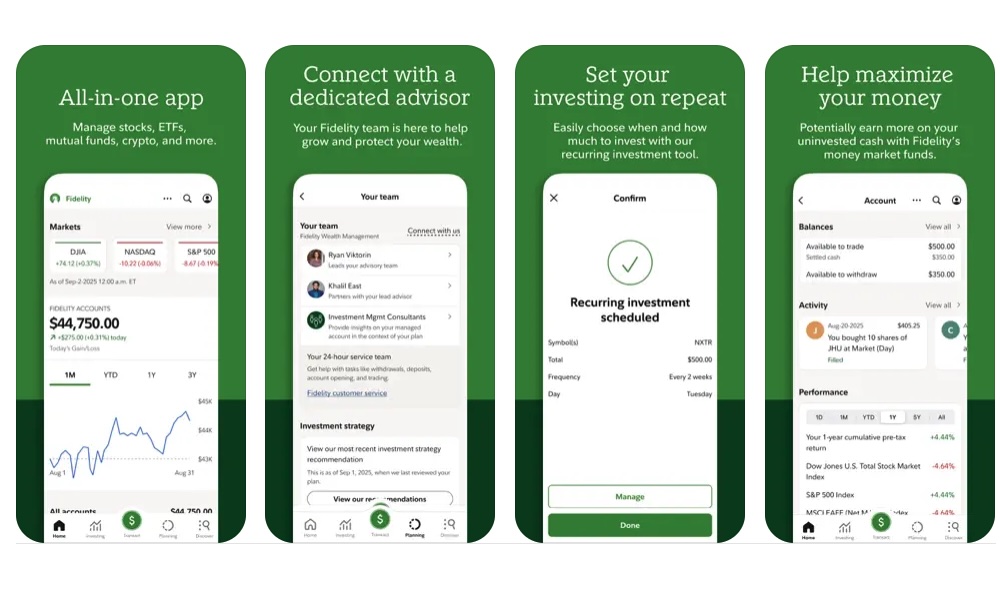
Fidelity’s app does more than just help you trade and manage your portfolio; it also includes many educational resources and planning tools that try to help you with your finances in the long run.
The retirement calculators and asset allocation tools help you think before you make any investment. Instead of focusing on daily changes, you begin visualizing how today’s decisions shape your investment’s future.
The educational content inside Fidelity explains diversification, tax strategies, and portfolio balance. This guidance encourages disciplined investing rather than just winging it, which, let’s face it, is how many of us handle our finances.
SoFi
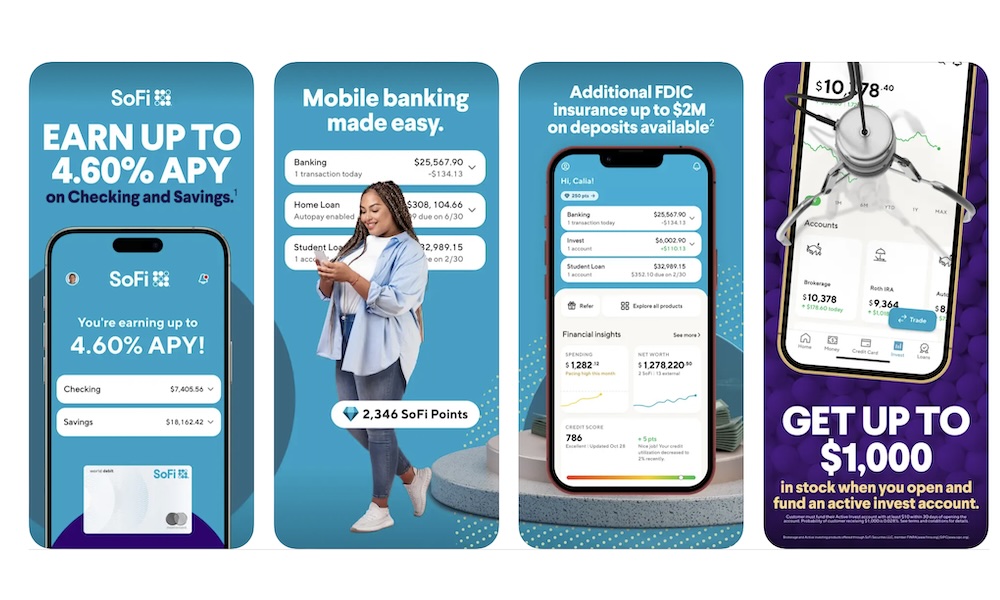
SoFi blends banking, investing, and financial education into a single app. The best part is that SoFi doesn’t treat investing as separate from daily financial management.
You can track spending, monitor credit, invest in assets, and read market updates in the app. That interconnected view helps you understand how to keep your finances in check, and your investments will be affected by inside and outside events. For example, investing aggressively while carrying high-interest debt may not be optimal.
Additionally, SoFi’s straightforward user interface makes finance feel less intimidating, which increases the likelihood that you’ll actually use it consistently. Sometimes, some apps make it way harder than it needs to be to navigate them or find a specific feature or setting you need. But SoFi makes everything as easy as possible.
Acorns
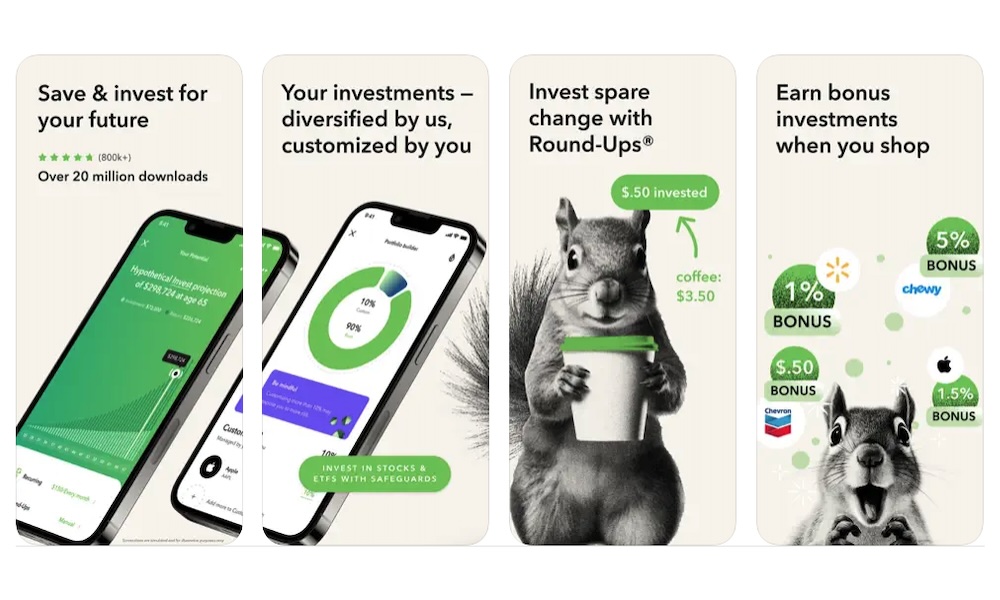
Acorns focuses on automated investing through small, consistent contributions. Its round-up feature invests spare change, demonstrating how compounding works in practice. Seeing small amounts grow over time reinforces the importance of being in the market rather than trying to time the market. It teaches that wealth accumulation often comes from steady participation rather than dramatic moves.
Besides helping you invest in an easy and affordable way, the app’s educational content explains pretty much everything else you’ll need to know. There are countless resources that will help you understand more about investing, the financial world, and even how to handle your own money the right way. The best part is that it doesn’t use complex language or expect you to be a pro from the get-go. Just like investing, you can learn at your own pace and little by little.
YNAB
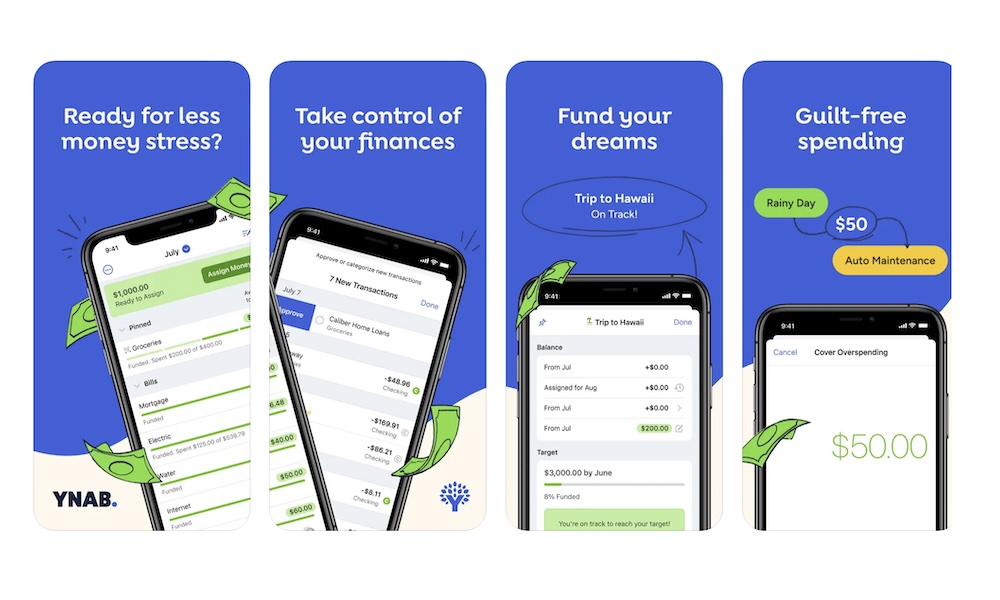
YNAB is an app that lets you budget all your income, but it also teaches you how to do it the right way. Instead of just tracking spending passively, it requires you to assign every dollar a purpose. That way, you shouldn’t be able to spend more money than what you make.
This different method helps build awareness and control. When you know exactly where your money is going, financial stress starts to go down.
The app is based on YNAB’s four rules, which it teaches you through a bunch of different articles and videos. The rules’ goal is to teach you how to keep your money for a rainy day and save in advance, so you don’t suffer from those unexpected expenses that we’ve all had to deal with.
Besides that, there are more articles and videos that can teach you how to make the most of your money and how to save for the stuff that you really need. Overall, even if this app won’t necessarily teach you about the market and how to invest, you’ll still learn how to control your money before it controls you.
Investopedia
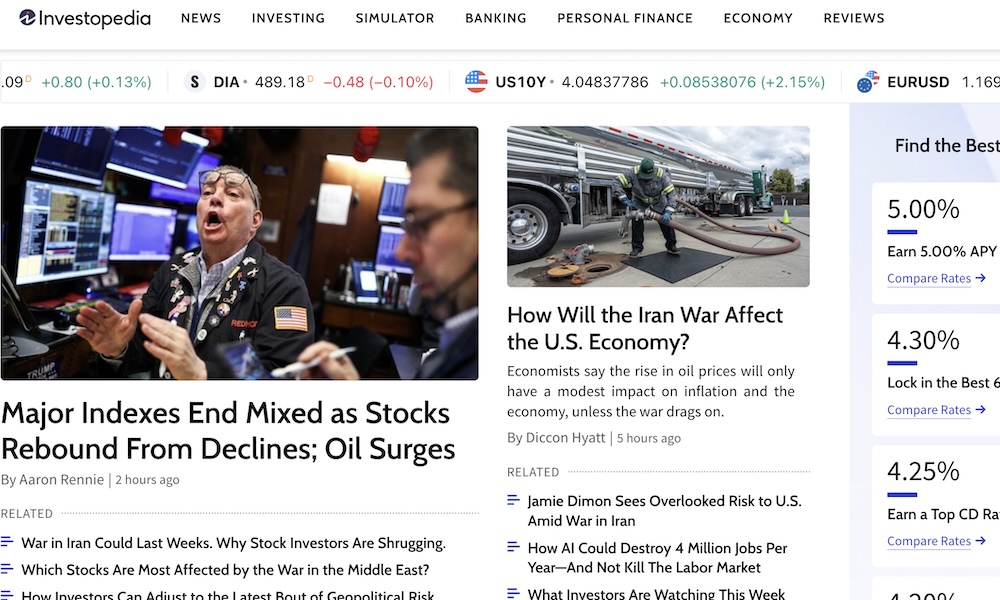
As an honorable mention, we have a platform that forwent the App Store for a world-class mobile site, but it’s so useful, we recommend using Safari's "Add to Home Screen" feature so it functions just like a native app on your iPhone.
Finance can feel mostly intimidating because of its vocabulary. You’ll find terms like yield curve inversion, duration risk, margin call, and implied volatility that are often just mentioned casually. If you don’t understand them, it’s easy to feel like you’re missing something.
Investopedia eliminates that gap by working as a comprehensive financial dictionary and learning platform. When you encounter a term you don’t understand, you can look it up immediately and get a clear, easy-to-understand explanation. The best thing is that the platform doesn’t stop at definitions; Investopedia often includes examples and context that connect abstract terms to real-world scenarios.
The platform also includes guides on strategies like options trading, dividend investing, bond allocation, and risk management. Instead of just telling you what something is, it explains how it works, why it matters, and why it can be dangerous if you don’t know what you’re doing.
Learn More About the Financial World in 2026
Becoming financially literate in 2026 isn’t as hard as it once was. All you need are the perfect tools. Some apps teach you how markets react in real time, while others provide macro context. Others act as a safety net, helping you protect your capital through budgeting and long-term planning. Together, they create a well-rounded education.
When you understand terminology, headlines stop feeling overwhelming. When you know what the instruments that are available to you are, you start to feel more compelled to work on your financial security and future.
As long as you’re using the right apps, you’ll be able to learn more about the financial world and even show your friends or family how they can learn too.