
10 Apps to Make Your 2026 Fitness Resolutions Stick
 Jordan González
New Year’s fitness goals usually don’t collapse because you’re just lazy; they collapse because life is busy, motivation is inconsistent, and the plan you picked asks too much of you. And let’s be honest — it’s also because we’re all a little bit lazy sometimes. But don’t sweat it (pun intended); this happens to the best of us.
That’s why having the right fitness apps matters a lot more than you think. The best ones make training smooth and even fun. They give you structure when you’re at a loss, feedback when you’re starting a new workout, and encouragement when you’d rather go and eat a burger.
With an iPhone (bonus points if you have an Apple Watch), keeping track of all your progress and health data is incredibly easy.
To help you crush your 2026 resolutions, we’ve gathered some of the best workout apps for your iPhone. Whether you want to get stronger, run your first 5k, or just live a healthier life, there’s an app for you. Read on for 10 of the best fitness apps that will help keep your 2026 fitness resolutions on track.
Apple Fitness+
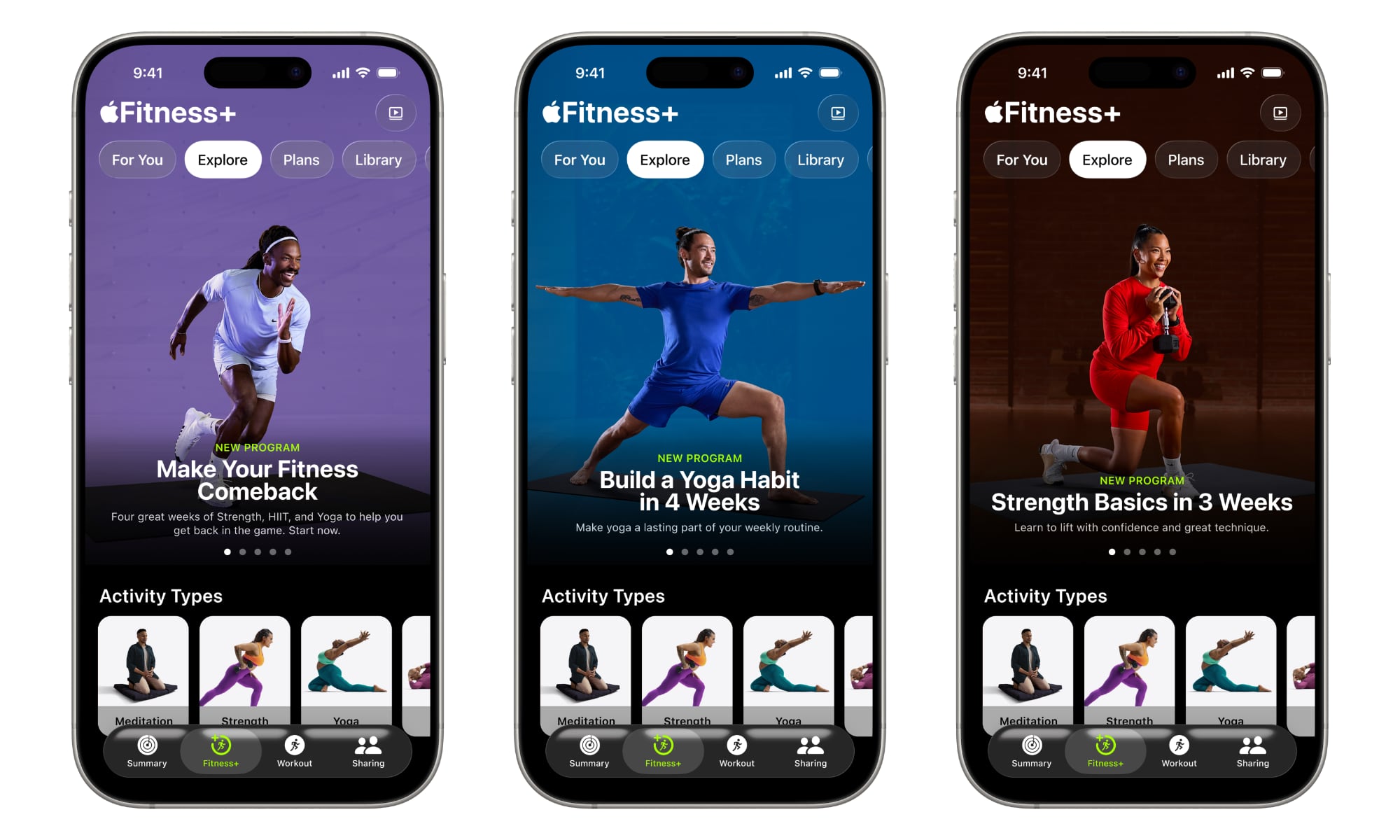
If you want the smoothest workout experience on an iPhone, Apple Fitness+ is still the best on the market. It’s built directly into Apple’s Fitness app, which means you can just choose your favorite workout as easily as choosing a playlist.
If you’re just starting out, the hardest thing is figuring out which workouts you need to hit and how long or hard you should work out. But with Apple Fitness+, you can let the app handle most of the heavy lifting.
Instead of hunting for a routine, you pick a workout type (Strength, HIIT, Yoga, Pilates, cycling, rowing, mindful cooldowns, and more) and follow the instructions of one of Apple’s coaches. If you have an Apple Watch — or even a set of AirPods Pro 3 — real-time metrics like your heartbeat show up on screen while you work out, which is strangely motivating, especially when you’re trying to see your progress.
Another great thing about the platform is that it offers various challenges and programs that are perfect for many occasions and people. For example, Apple regularly promotes January activity challenges and adds structured programs that are designed to help people restart routines without overthinking it.
Nike Training Club
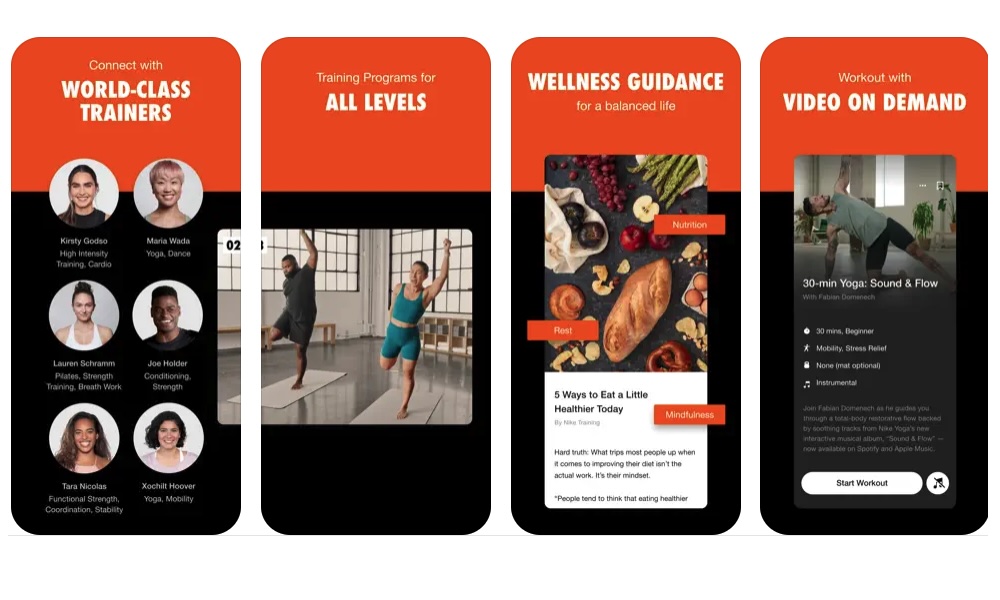
Nike Training Club is one of the easiest apps to recommend to someone who’s starting from scratch because it’s genuinely so easy to set up and use. The interface is seamless and friendly. You basically just open it, choose a workout, and go.
The app shines when you want guided workouts that still feel like even a newbie can tackle them. You’ll find strength sessions, mobility work, yoga-style flows, and other types of workouts and programs that help you build a healthy habit over time. It’s especially good if your goal is get in shape at home without buying equipment on day one.
Another huge benefit is coaching. Even if you’ve never done a proper warm-up or you’re not sure what tempo means in a strength workout, the app helps you move with intention instead of guessing and hoping you’re doing it right.
Strava
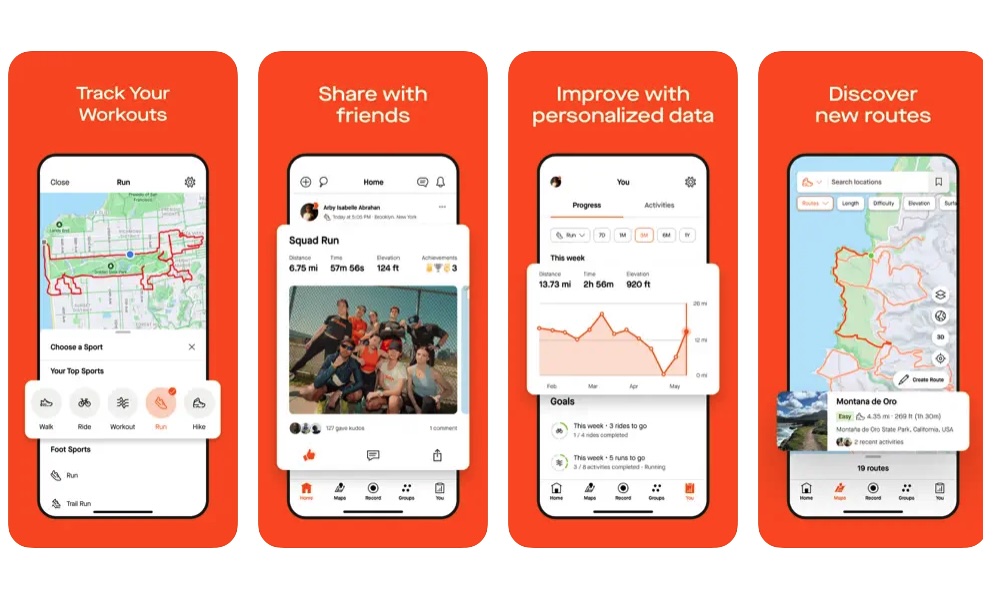
Strava is the app for people who don’t need more workout options but rather more motivation. It’s best known for running and cycling, but it’s really a consistency tool disguised as a tracking app.
Strava works because it makes workouts feel more social without forcing you to share everything with all your Facebook friends. You can follow friends, encourage people, join a community of others like you, and track progress over time. For many people, that tiny hit of accountability is the difference between skipping a run and showing up.
If you’re the type who starts strong in January and slowly fades in February, Strava’s community vibe can keep you in the game. It also supports routes and performance insights, especially if you’re someone who likes the idea of improving pace, distance, or consistency over time.
Runna
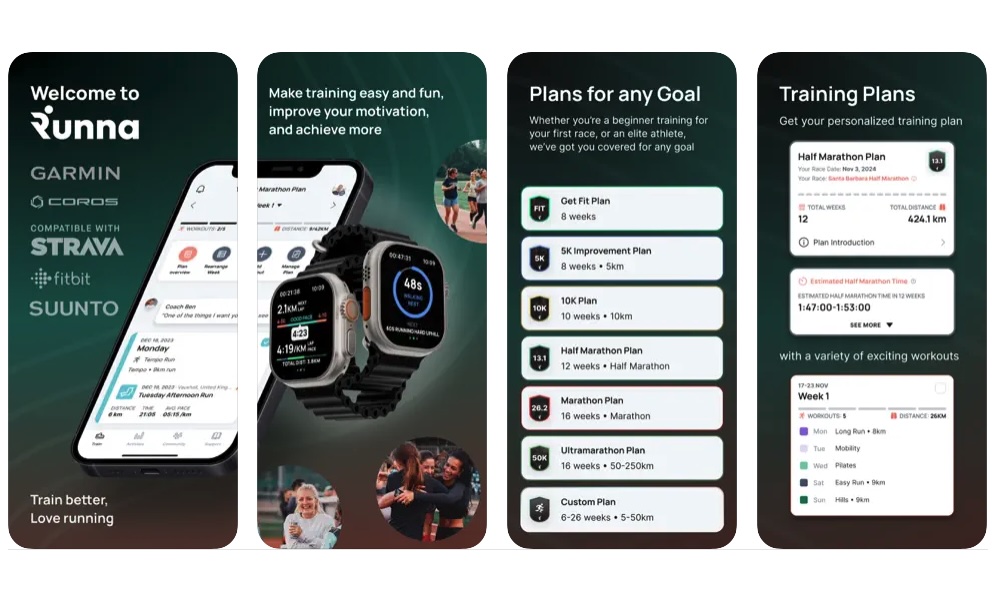
Instead of more motivation, some people need a solid plan they can follow. Runna is perfect for that. Instead of thinking about whether you should run today, you get a structured schedule built around your goal, your ability level, and your availability.
Of course, you’ll still need to put in the work for yourself, but the app can help you remove the decision-making process and stop working out based on your vibes. You show up, do what today’s workout says, and let the plan handle the progression.
Runna is especially helpful if you want to run your first 5K, improve your running time, or work toward a half-marathon or marathon without hiring a coach. It’s also the kind of app that makes running feel less random, because it shows you what easy runs, intervals, and long runs are actually doing for your fitness.
Peloton
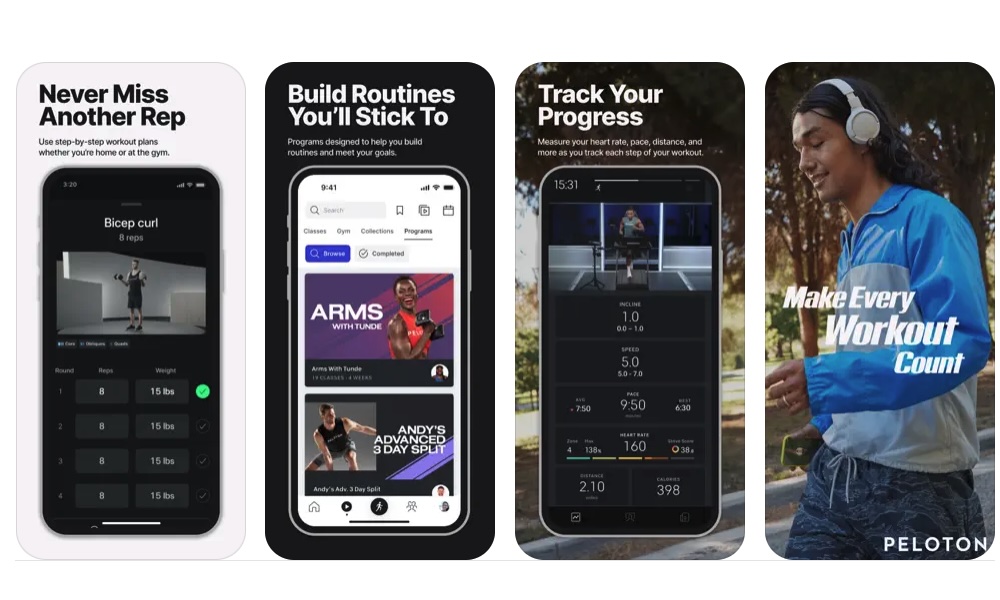
Contrary to what some might believe, you don’t need Peloton equipment for Peloton to work. The Peloton app is basically a massive library of instructor-led classes that works like Apple Fitness+. That means you’ll find different classes for strength, running, walking, cycling, yoga, mobility, stretching, and more. It’s one of the best apps on the market, and it’s designed to make workouts feel guided and energetic.
The Peloton app has been around for a really long time, and that’s partly due to the energy all its instructors bring to the table. If you’re someone who struggles to push yourself alone (especially on days when motivation is low), a good instructor can carry you through.
Of course, if you need more than that, the app also features streaks, challenges, and progress markers that turn consistency into a game you don’t want to break.
Another reason why the Peloton app is great is that it fits into anyone’s busy schedule because it features a ton of different classes with different time lengths. You can filter by time in case you only have ten, twenty, or thirty minutes. You can pick something that fits your day instead of waiting for a “perfect” time window that never comes.
Fitbod
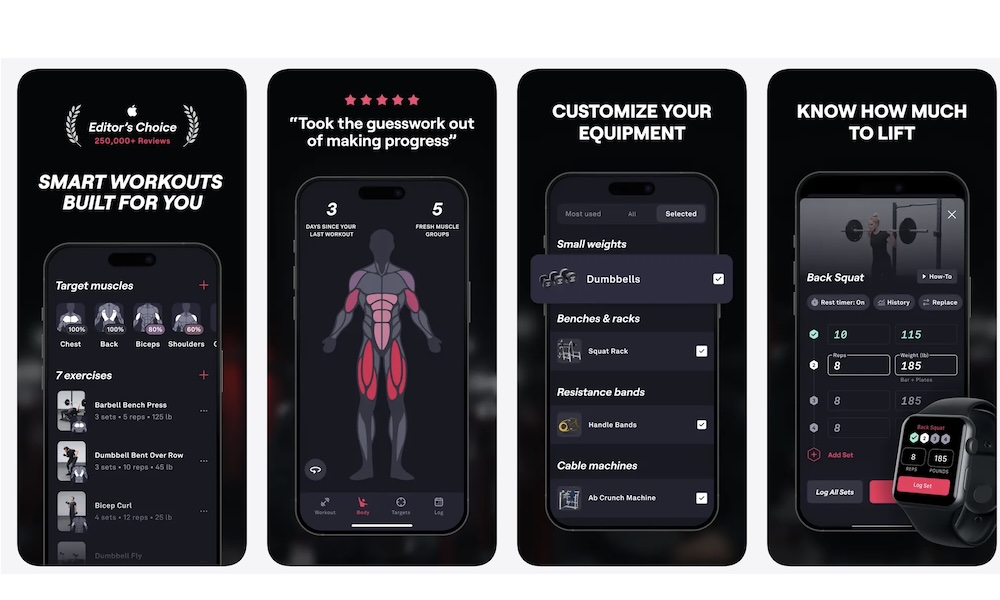
Fitbod is for those of us who want to get stronger but don’t want (ot doesn't know how) to build programs from the get-go. It automatically gives you strength workouts based on your goal, training history, and the equipment you have available, so it can work for a full gym setup or a more minimalist workout-at-home setup.
The reason Fitbod will help you stay consistent is its progressive structure. It pushes you toward improvement without requiring you to understand much about the world of fitness. Over time, it automatically adapts to what you’ve done, helping you avoid repetition and the feeling of doing the same workout without seeing any results.
If your goal is muscle gain, general strength, or just feeling more athletic, Fitbod can be a really practical guide, especially when you’re still learning what exercises you like and what you’ll actually do consistently.
Strong
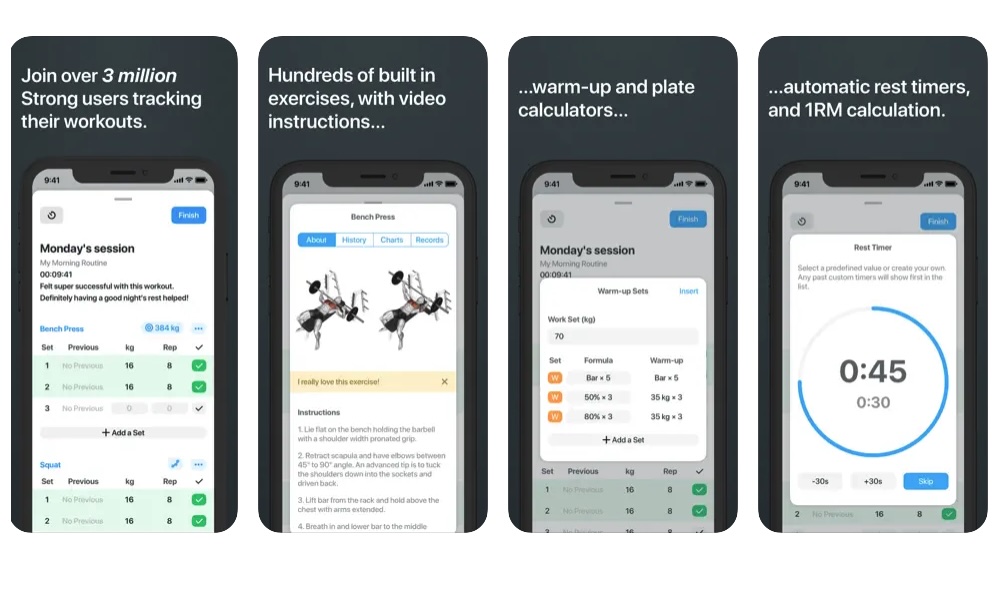
If you lift weights or want to get started, Strong is one of the cleanest workout logging apps out there. Logging your workouts might sound boring, especially if you just want to lift heavy stuff and feel the burn, but it’s truly a cheat code for progress. When you track what you did last time, you stop guessing, and you start getting stronger on purpose.
Strong is popular because it doesn’t overcomplicate things. You build routines, track sets and reps, and watch your numbers improve. It also supports more advanced logging features, like timers, rest tracking, and performance insights, if you want to get more serious later.
Yoga | Down Dog
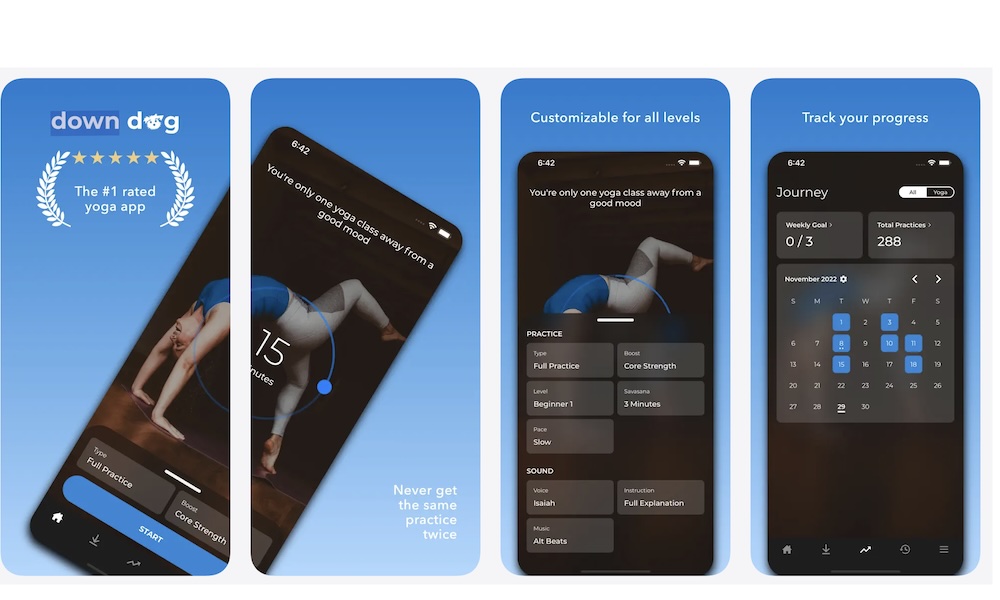
Down Dog is one of the best apps for when you want to start practicing yoga without worrying about finding the right online classes. That sounds small, but it’s a huge deal for those of us who are looking for any excuse to avoid working out. When you remove the decision of what session to do, you can just focus on getting the work done.
Instead of having the same library of videos for everyone, Down Dog generates a session based on your preferences, like length, level, focus, and music. That means you can do a gentle recovery flow after strength day, a faster session when you want to sweat, or something more mobility-focused when your body feels tight.
If your New Year's goal involves stress management, flexibility, better recovery, or simply moving more consistently, Down Dog is a great way to build that habit.
MyFitnessPal
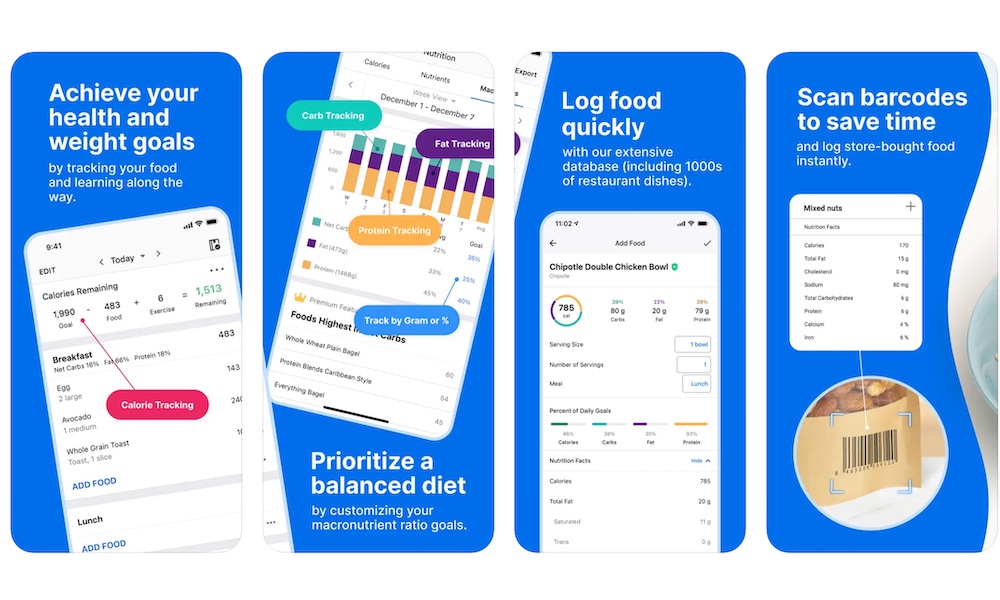
If your goal is fat loss, muscle gain, or better energy, nutrition matters a lot more than you think. And if you want to watch over what you eat, MyFitnessPal is still one of the biggest names in food tracking because it makes the habit relatively simple once you get going.
The best part of tracking isn’t that you have to be strict with yourself. In fact, most people will tell you to focus on the opposite. Of course, you will need to focus on creating a habit of logging all your food as soon as possible.
When you log consistently for even a couple of weeks, you learn what your normal eating patterns actually look like, and what changes will help you read your milestones. MyFitnessPal also promotes premium tools like deeper goal tracking and extra logging features, depending on your plan.
MacroFactor
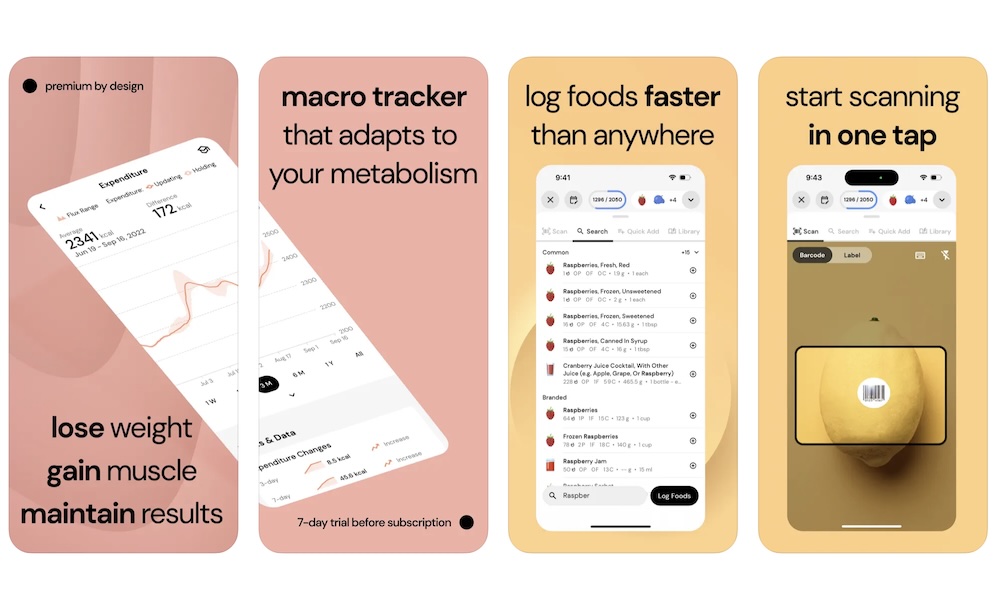
MacroFactor is for someone who is looking for a more data-driven approach without constant recalculations. Instead of giving you a static calorie target and hoping it works forever, MacroFactor is built around an adaptive model that adjusts based on your real-world progress. After a few days, a digital “coach” will automatically adjust your macros, so you know whether to increase or decrease your food intake to reach your goals.
This is a big deal because your body isn’t static. If you lose weight, your energy needs can change. If you increase activity, things shift again.
With that said, MacroFactor works best when paired with a smart scale, as it needs daily weight data to accurately calculate your true expenditure. Of course, if you’re serious about weight loss, you probably already have one, but if you don’t want to pay for a subscription and more equipment, you might want to try a different option.
Start With an App That You Will Actually Use
As you can see, there are tons of different apps to help you lose weight, gain muscle, and crush your goals in 2026. With that said, even the best apps can only take you so far.
You’ll also need to stick to your goals and create a new healthy habit. Once you have that, it doesn’t matter which apps you use, or if you decide to skip an app at all; you’ll make it to your goals by sheer determination.
To get started, pick only the apps that make working out feel easy. Whether you want a digital coach, automatic plans and sessions, a data-heavy log, or a social community to keep you honest, there’s an app on the list that you can try. Since you can use most of these apps for free, download a couple, see what sticks, and make 2026 the year your resolutions actually become routines.